captain future ( 1943 )
 January 3rd, 2005 |
  Author: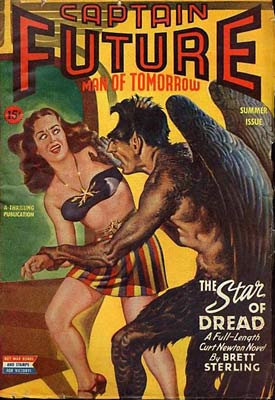
Das allererste Captain Future Abenteuer wurde bereits im Jahr 1940 veröffentlicht. Edmond Hamilton (1904-1977) schrieb die literarische Quelle für die Zeichentrickfassung von 1978. Die Geschichten wurden in Pulp Magazinen für 15 Cents/Stück verkauft. In der Zeit von 1940-44 erschienen vierteljährlich insgesamt 17 Ausgaben (im Herbst ‘43 erschien kein Heft) von Captain Future – Wizard of Science (bzw. Man of Tomorrow). Alle außer drei Ausgaben wurden von Edmond Hamilton geschrieben. Danach gab nur noch sporadisch neue Captain Future Geschichten.
Bron: captainfuture.com
 Posted in
king kong ( 1933 )
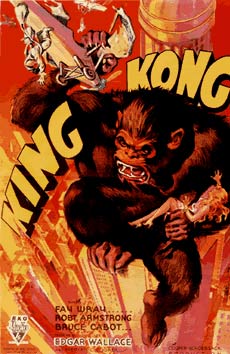
The greatest and most famous classic adventure-fantasy (and part-horror) film of all time is King Kong (1933). Co-producers and directors Merian C. Cooper and Ernest B. Schoedsack (both real-life adventurers and film documentarians) conceived of the low-budget story of a beautiful, plucky blonde woman (Fay Wray) and a frightening, gigantic, 50 foot ape-monster as a metaphoric re-telling of the archetypal Beauty and the Beast fable. [Fay Wray mistakenly believed that her RKO film co-star, 'the tallest, darkest leading man in Hollywood,' would be Cary Grant rather than the beast. Later in her life, she titled her autobiography "On the Other Hand" in memory of her squirming in Kong's grip.]
Bron: filmsite.org
Donald Byrd “Mustang!” ( 1966 )
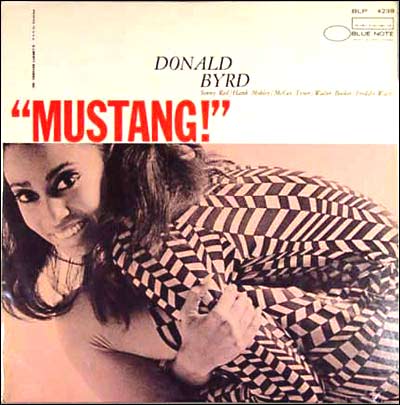
Donald Byrd, a talented hard bop trumpeter during his prime (although rarely reaching the technical heights of Lee Morgan and Freddie Hubbard), performs a varied repertoire on Mustang!. “Dixie Lee” has dated rhythms, and “Mustang” was an attempt to achieve a hit on the level of Morgan’s “The Sidewinder.” However, Byrd sounds fine on those numbers; he digs into the complex chord changes of “Fly Little Bird Fly,” is sensitive on “I Got It Bad,” swings on his “I’m So Excited by You,” and performs his memorable countermelody to “On the Trail,” which had been recorded earlier by several other musicians. Teamed with a typically impressive Blue Note crew (altoist Sonny Red, tenor saxophonist Hank Mobley, pianist McCoy Tyner, bassist Walter Booker, and drummer Freddie Waits), Byrd performs high-quality straight-ahead jazz that fits the modern mainstream of the era. Also on the CD reissue are a pair of selections (“Gingerbread Boy” and “I’m So Excited by You”) from an earlier quintet date (with tenorman Jimmy Heath, Tyner, bassist Walter Booker, and drummer Joe Chambers) that, despite being excellent, went unissued until 1997.
Bron: discography
new year bash ( 1967 )
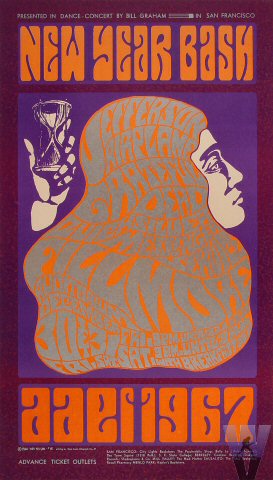
Bill Graham’s first New Year’s Eve Bash was a legendary, all-night affair with additional bands dropping by to supplement the advertised fare, and this second Bash continued the tradition. The music played ’til dawn, sometimes falling on the deaf ears of the somnambulent, and Graham and his staff served breakfast to those who stayed the night. The Grateful Dead and Jefferson Airplane were at all the early New Year’s concerts, and the Dead made it an annual gig for years. The grey letters cascading through the woman’s hair are silver on the original print.
Bron: wolfgangsvault.com
chained ( 1934 )
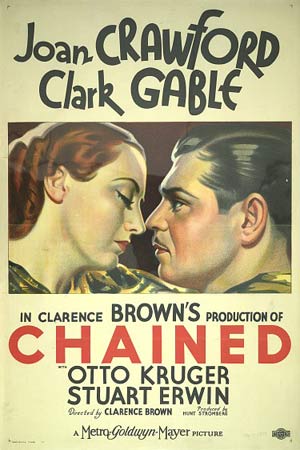
Fairly standard story — Crawford is a “career gal” in love with her boss — the exquisitely dapper and gentlemanly Kruger — or, at least, she thinks she is until a shipboard romance with Argentinian rancher Gable gets in the way. The only gimmick here is the audience’s expectation that Kruger will go mad or seek some kind of revenge (you can even imagine Lon Chaney in the role), but he doesn’t. The chemistry between Gable and Crawford is the picture of passion, although they are not aided by the tepid dialogue (“the sun of love will always shine on us” and such stuff), and Kruger and Crawford present a believable picture of a marriage based on respect instead of love.
Bron: imdb.com
the modern jazz quartet
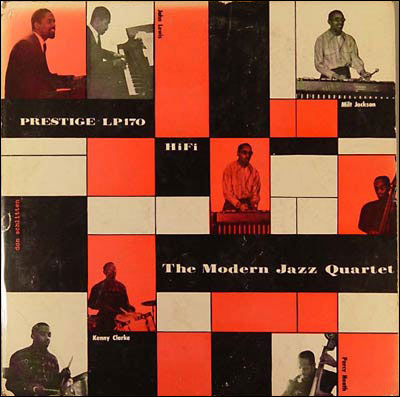
The Modern Jazz Quartet were incredibly important in the development of jazz in the 1950s, and although they officially disbanded in 1974, they’ve reformed for both concerts and recordings several times since then, making them now an “evergreen†jazz band. It was not always so.
The Modern Jazz Quartet was originally formed as the Milt Jackson Quartet (which, conveniently, had the same initials, MJQ) and consisted of Jackson on vibraphone, John Lewis on piano, Percy Heath on bass and Kenny Clarke on drums. Of these, Clarke was the veteran of the group, a drummer who had been at Minton’s after-hours club in 1939, where Charlie Parker, Dizzy Gillespie, Thelonious Monk, Charlie Christian and Clarke invented “bebop†or bop, a harmonically advanced and challenging kind of new jazz.
Bron: holeintheweb.com