Archive for the ‘1880 - 1920’ Category
heart of klondike ( 1897-1898 )
 January 4th, 2005 |
  Author: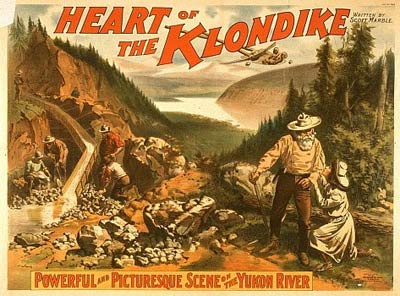
Few episodes in Canadian history have so captured imaginations as the fabulous Klondike Gold Rush, 1897-8. Thousands of adventurers and fortune seekers faced the rigors of the trail to dig for gold along creeks feeding the Klondike River. Dawson, a trading post on a mud flat at the confluence of the Klondike and Yukon Rivers, mushroomed in a single season to a sprawling boom town, made up of log and frame buildings, and tents. Some 5,000 people from the four corners of the earth arrived at Dawson. At the height of the gold rush, 1898-9, the itinerant population of Dawson was estimated between 20,000 and 30,000, making it the largest Canadian community west of Winnipeg. The excitement quickly petered out after the turn of the century, with the formation of large corporations which bought up individual claims. The Klondike continued to produce gold in abundance for a number of years.
Bron: pc.gc.ca
 Posted in
schetsboek van william morris
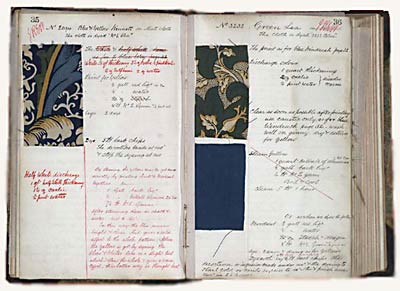
William Morris was born in Walthamstow, Essex, on 24 March 1834. The son of a wealthy businessman, he enjoyed a comfortable childhood before going to Marlborough and Exeter College, Oxford. He originally intended to take holy orders, but his reading of the social criticism of Carlyle, Kingsley and Ruskin led him to reconsider the Church and devote his life to art. After leaving Oxford, Morris was briefly articled to G. E. Street, the Gothic Revival architect, but he soon left, having determined to become a painter. His admiration for the Pre-Raphaelites led him to be introduced to Dante Gabriel Rossetti whose influence can be seen on Morris’s only surviving painting La Belle Iseult.
In the 1860s Morris decided that his creative future lay in the field of the decorative arts. His career as a designer began when he decorated the Red House, Bexleyheath, which had been built for him by Philip Webb. The success of this venture led to the formation of Morris, Marshall, Faulkner & Co. in 1861. The ‘Firm’ (later renamed Morris & Co) was particularly well-known for its stained glass, examples of which can be seen in churches throughout Britain. Morris produced some 150 designs which are often characterised by their delightful foliage patterns.
Bron: morrissociety.org