Archive for the ‘jaren 20’ Category
 January 17th, 2005 |
  Author:
 Posted in
Notgeld Eutin ( 1921 )
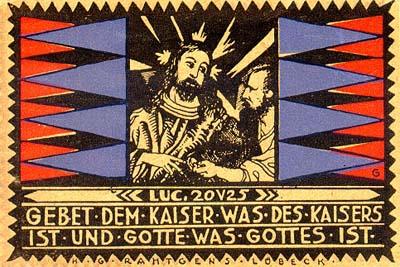
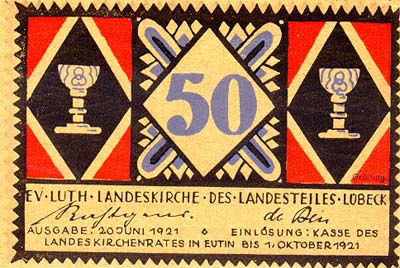
( … ) Ab Anfang 1921 zielte fast die gesamte Notgeldproduktion nur noch auf den Geldbeutel der Sammler. Genügte vorher ein Schein für eine Wertstufe, so waren es jetzt oft vier oder sechs, manchmal sogar bis zu 20 Scheine. Das brachte genügend Geld in die leeren Kassen. Doch die Konkurrenz wurde schnell größer. Am Ende gab es wohl von über 1400 Stellen diese Scheine, die, da oft in zusammengehörenden Reihen produziert, “Serienscheine” genannt werden. Um seine eigenen Scheine weiterhin gut verkaufen zu können, mußte man sich schon etwas einfallen lassen. So gab es ganz ungewöhnliche und ungebräuchliche Nominale wie die Scheine von Wittenburg für 99, 199 und 299 Pfennige; oder teilbares Kleingeld, auch hier völlig ungebräuchliche Nominale wie die 97+2+1 Pfennige aus Freiberg in Sachsen. ( … )
Bron: das-deutsche-notgeld.de
quo vadis (1924)
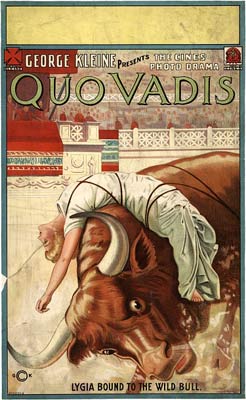
This cinematic spectacle was released in both a national and an international version. The film stars internationally renowned actors such as the German Emil Jannings (Nero), the British Lilian Hall-Davis (Licia) and the Italian Elena Sangro (Popea). The aim was to live up to the success of the first 1912 screen version. Nevertheless, despite all these efforts, the audiences remained at large and instead of causing a revival of the Italian film industry, this film marked the end of the ´historical costume drama´ genre.
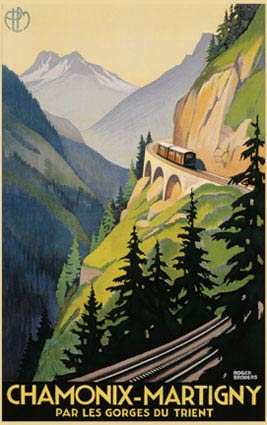
hamburg-amerika linie
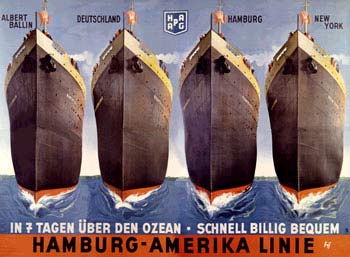
The Hamburg-Amerika Line carried more Eastern European emigrants to the United States than any other line. From the 1880s until the outbreak of the First World War, over a million Eastern Europeans – mainly Jews – sailed from Hamburg to the United States. As with all other passengers liners, the Hamburg-Amerika vessels carried passengers from all sections of society across the Atlantic. However, the third class or ’steerage’ passengers were kept well apart from the wealthier travellers.
metropolis ( 1925-1926 )
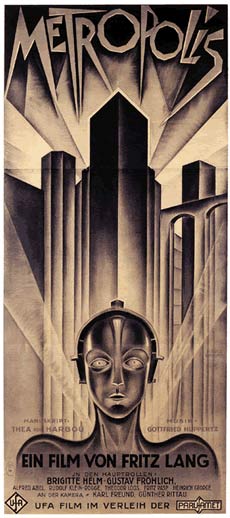
The silent classic Metropolis was created in Germany in 1925-26 by the Austrian director Fritz Lang in collaboration with his wife, Thea von Harbou (1888-1954). This science-fiction film, so admired today, was not even a big box-office success in its time and the production costs almost put the Ufa film studios out of business. But Fritz Lang’s Metropolis continues to fascinate viewers today, and for over seven decades it has influenced Hollywood and world cinema — from music videos to films such as Blade Runner and Robocop. Lang himself went to Hollywood in 1933, where he continued to work until 1956.
Bron: germanhollywood.com